Column
Tatarstan
The Economy of an Independent Tatarstan: From Dependence to Sovereignty

Whenever we are once again told that Tatarstan cannot “make it” without Moscow, that it will “collapse” or “go under”, the same thing lies behind these claims: an unwillingness to do the maths. All it takes is to sit down and calmly add up the figures, and the rhetoric of the metropole falls apart.
Economics is an exact science. It knows nothing of Brezhnev-era slogans about “The economy must be economical”, nor of Putin’s patriotic blackmail. It deals only with structures, flows, and balances. And it is precisely the structure of our republic’s economy that shows that a sovereign Tatarstan is not merely viable — it has the potential to become one of the most competitive economies in the entire Volga-Ural region.
Let us begin with the foundations. Tatarstan’s gross regional product already exceeds 5.5 trillion rubles. This is not a raw-material monoculture, nor simply an “oil pipeline” economy. It is a diversified system in which extraction goes hand in hand with deep processing, and heavy industry coexists with the middle class and the service sector.
The republic extracts around 34 million tonnes of oil annually, and three quarters of it is refined right here, at TANECO and TAIF-NK, with a refining depth of over 99%. According to estimates, known conventional oil reserves will last for another 30–40 years — giving us a head start of two generations. And that is without even counting the 7 billion tonnes of natural bitumen that we have already learned to bring into commercial production.
Nizhnekamskneftekhim and Kazanorgsintez produce around a quarter of all polyethylene in Russia and more than 40% of the country’s synthetic rubber. In this field, we have no competitors of comparable scale in our region.
Built on this foundation is a high-tech industrial belt: KAMAZ, a manufacturer of heavy-duty trucks; the Kazan Aircraft Production Association and the Kazan Helicopter Plant; and shipbuilding in Zelenodolsk. All of this is complemented by a surplus-generating agro-industrial complex.
Tatarstan ranks first in Russia in milk production, is a leader in beef, and is second in the country for potatoes. In wheat production, we traditionally rank second after Krasnodar Krai. The republic ensures its own food security without handouts from Moscow and also generates a surplus for export.
The main fiscal shock of sovereignty will not even come from introducing new taxes, but from putting an end to the old plunder. Today, two thirds of the taxes collected in Tatarstan are transferred to Moscow — primarily the mineral extraction tax on oil and VAT, which is levied on virtually all added value. Some of this money returns in the form of federal transfers, but only a small share: around 89 billion rubles in 2024, against the hundreds of billions that went to the centre. This is a form of tribute, paid for reasons that are far from clear: to finance a war, Putin’s whims, and someone else’s imperial ambitions.
The moment these financial flows are redirected and remain at home, the republic will acquire an enormous capital surplus. Not the deficit in which we are deliberately kept today, but a genuine surplus — more money coming in than going out. The main task of an independent government will be not to squander these trillions, but to allocate them wisely: to reduce the basic rates of VAT and corporate profit tax, subsidize tariffs for domestic manufacturers, and lower electricity and logistics costs for KAMAZ and the petrochemical giants.
At the same time, a Tatar State Development Fund will be established, modelled on Norway’s sovereign wealth fund, whose assets today exceed two trillion dollars. Surplus oil revenues will no longer flow into the pockets of the imperial centre. Instead, they will be invested in a diversified international portfolio, with the returns benefiting the citizens of Tatarstan. This will serve as a financial cushion in the event of falling oil prices and as insurance for future generations.
On the monetary front, a national currency will be introduced — call it the altyn or the Tatar sum, the name is not what matters. During the transition period, it will be firmly pegged to a basket of petroleum products and to the foreign currency and gold reserves of the Tatar National Bank. No speculative fluctuations, no chaos — only disciplined backing.
The main objection raised by sceptics is that Tatarstan is landlocked. “Where would you go? You are surrounded on all sides.” But a glance at the map is enough to reveal the obvious: we have the Idel (the Volga), and we have the historic Volga trade route running from north to south, which was already operating in the days of Volga Bulgaria. Restoring its extraterritorial status is a political challenge, not a geographical one. Through modernized ports in Kazan, Chistopol, and Naberezhnye Chelny, river-sea vessels will be able to sail into the Caspian Sea and from there reach the markets of Kazakhstan, Turkmenistan, Azerbaijan, and Iran.
Beyond Iran lies access to the Indian Ocean; through Turkmenistan and Kazakhstan, to the Uzbek market of almost 40 million consumers; and across the Caspian, to the Persian Gulf states. Yes, there is a seasonal limitation: the northern section of the Idel freezes over for several months. That means building additional warehouse capacity and establishing logistical reserves for those months. This is an engineering challenge, and it is entirely solvable.
To prevent neighbouring countries from choking us with customs duties, we will use a trade advantage that Moscow does not possess: our own logistics infrastructure. Tatarstan will sign free-trade agreements with Bashkortostan, Kazakhstan, and other fraternal territories. They will not impose duties on our polymers and trucks, while in return receiving preferential access to our transport and port infrastructure.
This is not charity, but a natural and mutually beneficial exchange. On this basis, we can build a diversified export portfolio: polyethylene and polypropylene for the tyre industry of the Commonwealth of Independent States; KAMAZ trucks and electric buses; Mi and Ansat helicopters; Euro-5 diesel fuel, of a quality suitable for Euro-6 engines, and aviation kerosene; and, as a strategically distinct sector, certified halal products for Central Asia and the Middle East, where the food crisis is deepening and demand for high-quality meat and dairy products exceeds supply.
The next step is the creation of an integrated economic structure: the Volga Economic Union, representing a market of 10–12 million active consumers. The logic of a Tatarstan–Bashkortostan partnership is particularly clear. It would involve combining the petrochemical capacities of Ufa, Salavat, Sterlitamak, and Nizhnekamsk; coordinating polymer prices; establishing joint control over the synthetic rubber market; and exchanging scarce feedstocks such as ethylene and propylene.
Chuvashia, with its electrical engineering and relay production for Kazan’s aviation and automotive industries, will also become part of this structure, as will Mari El, with its timber and pulp resources. Once the barriers are lifted, people will begin trading on their own, without instructions from above. After all, the administrative burden in Tatarstan has traditionally been heavier than in neighbouring regions, and businesses have long known where they can breathe more freely.
But the material economy is only half of the equation. The other half is something the imperial centre cannot take away, no matter how hard it tries: intangible capital. We have Innopolis, the only city in the Russian Federation built from scratch since the collapse of the Soviet Union — and one created specifically as an IT hub and special economic zone.
We can introduce a tax holiday — zero tax on profits, zero tax on dividends, and zero tax on intellectual property for exporters of IT services — and invite developers to work here. Turkey already attracts investors with tax incentives; Singapore, with a headline corporate tax rate of 17%, built its strategy on a system of targeted exemptions and incentives. Why should we be unable to do the same?
A regulatory sandbox for cryptocurrency and artificial intelligence, R&D centres of Asian companies, and data centres powered by cheap energy — all of this fits naturally into infrastructure that already exists in Tatarstan and needs only the right political conditions to take off.
Islamic banking represents another distinct area, and here we have a head start measured in centuries. Tatars are the northernmost Muslim people. Islam was adopted as the state religion of Volga Bulgaria more than 1,100 years ago, in 922. This historical capital is sufficient to issue sukuk — Islamic bonds backed by real industrial assets rather than empty promises. Through sukuk, sovereign wealth funds from Saudi Arabia, Qatar, Turkey, and Malaysia will be able to invest in Tatarstan. Financing infrastructure according to the principles of mudaraba and musharaka would mean sharing profits and risks with Gulf investors.
This is partnership, not the debt bondage of interest-based lending, which is prohibited in Islam. With the Kazan Halal Summit and regular economic forums, Tatarstan has already demonstrated that the Muslim world sees it as a natural gateway to the Volga region. All that remains is to cast off the imperial shackles holding it back.
Energy requires a separate and honest discussion. Tatarstan has a surplus of motor fuel and petroleum products, but it is integrated into Russia’s unified power system and depends on gas from Yamal. Tatneft’s own production of associated petroleum gas amounts to around 0.9–1 billion cubic metres annually, while the republic consumes 16–18 billion cubic metres. There is a solution. What matters is adopting a constructive strategy.
First, long-term, mutually beneficial agreements with Yamal, Kazakhstan, and Turkmenistan: gas has to be delivered somewhere, and the main pipelines already pass through our territory.
Second, modernizing the Minnibayevo Gas Processing Plant to achieve 99% utilization of associated gas.
Third, expanding underground gas storage facilities to create a strategic reserve sufficient for 6–9 months of industrial and municipal consumption, as is being done in Europe today.
The electricity sector must be modernized without illusions. The Zainsk State District Power Plant should be converted to combined-cycle gas turbine technology, reducing specific gas consumption by one third. The Nizhnekamsk Hydroelectric Power Plant should make maximum use of the capacity of its low-head turbines. TAIF, Tatneft, and KAMAZ will continue building their own power-generation capacity, reducing the burden on the common grid and protecting factories against outages.
The electricity networks should be synchronized with those of Bashkortostan and Samara on a commercial basis: mutual backup is more beneficial than isolation. On top of this, a green energy transition is needed: wind farms in the Kamsko-Ustyinsky, Spassky, and Rybno-Slobodsky districts, with a potential capacity of 150–200 megawatts; biogas plants at livestock facilities (Tatars from abroad have already offered ready-made technologies, but the previous authorities simply refused to let them in); and small-scale hydropower making use of the enormous water resources of the Idel and Chulman (the Kama). At their widest, the Volga and the Kama spread 43 kilometres across. It would be a sin not to make use of such a resource.
But no petrochemical industry, no Innopolis, and no sukuk will work without the most important factor of all: the quality of diplomacy. The success of a sovereign Tatarstan will depend almost entirely on its foreign policy — on flexible transit agreements, direct engagement with investors, and influential representatives who will tell the world our own story rather than Moscow’s version of it.
And here the republic possesses a resource that cannot be measured by any accounting method: 25% of Tatars live in Tatarstan, while 75% live beyond its borders, scattered across the world. Engineers, scientists, businesspeople, and cultural figures — all it takes is a call, and this human capital will respond not for financial gain, but out of a sense of belonging to their homeland. This may well be our greatest investment.
The conclusion is simple, yet serious. The economic model of an independent Tatarstan is viable. More than that, it has the potential to become a high-tech financial and industrial hub — a Volga Singapore or, if you prefer, a Volga Malaysia. We will have a budget surplus, a developed petrochemical industry, mechanical engineering, an agricultural surplus, Innopolis, Islamic capital, and the Volga.
We have 1,100 years of statehood and a diaspora numbering in the millions. As the saying goes, we have everything — except one thing: political will. For now. But will is something that can be acquired. It comes with the understanding that independence is not a risk; rather, it is a way of refusing to take the risk of slowly burning out in someone else’s war.
Tatarstan is capable of forging its own sovereignty. This article is not a utopian description. It is, in fact, a working draft of an instruction manual.
Ruslan Aisin, member of the Free Nations League, coordinator of the World Tatar Council
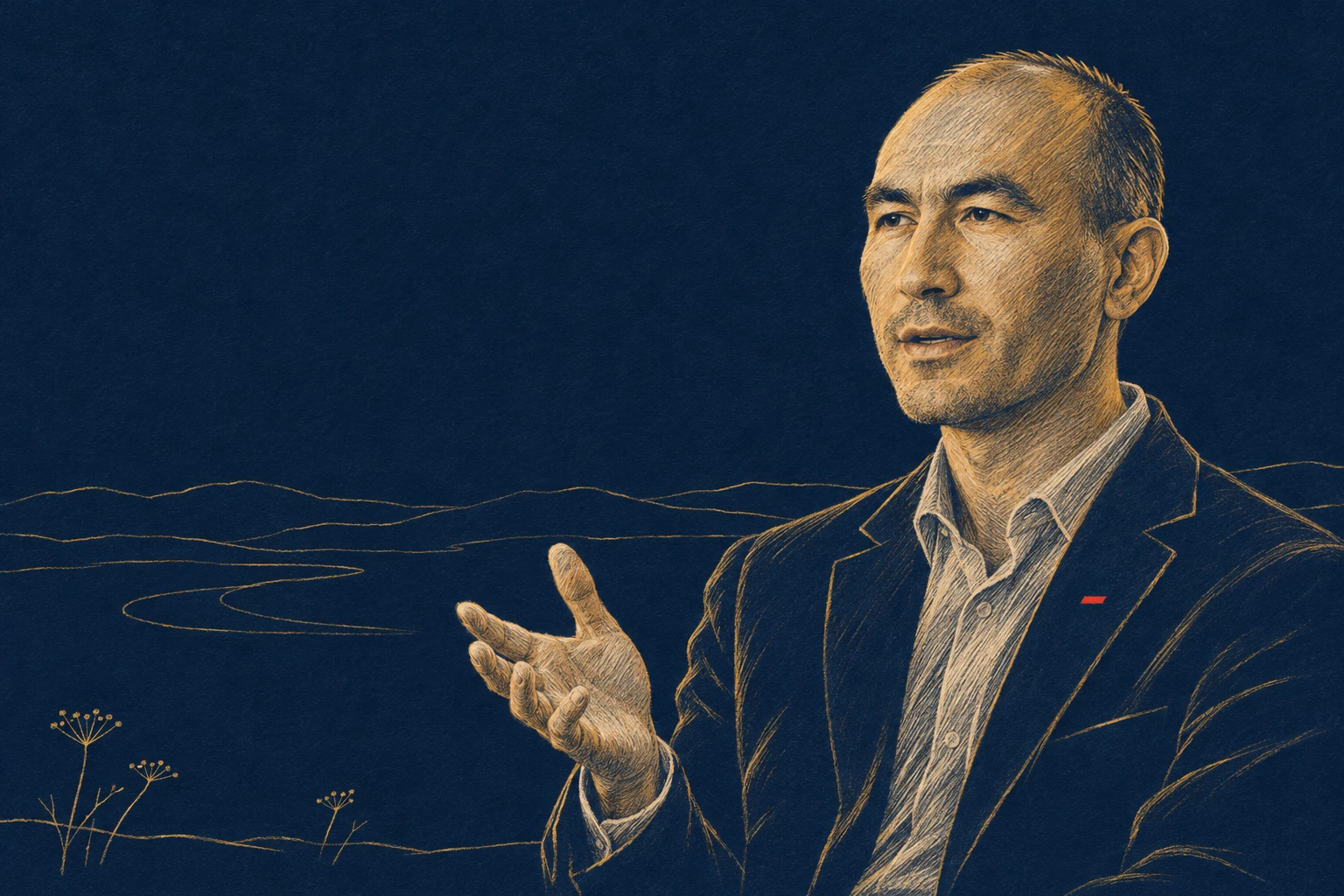
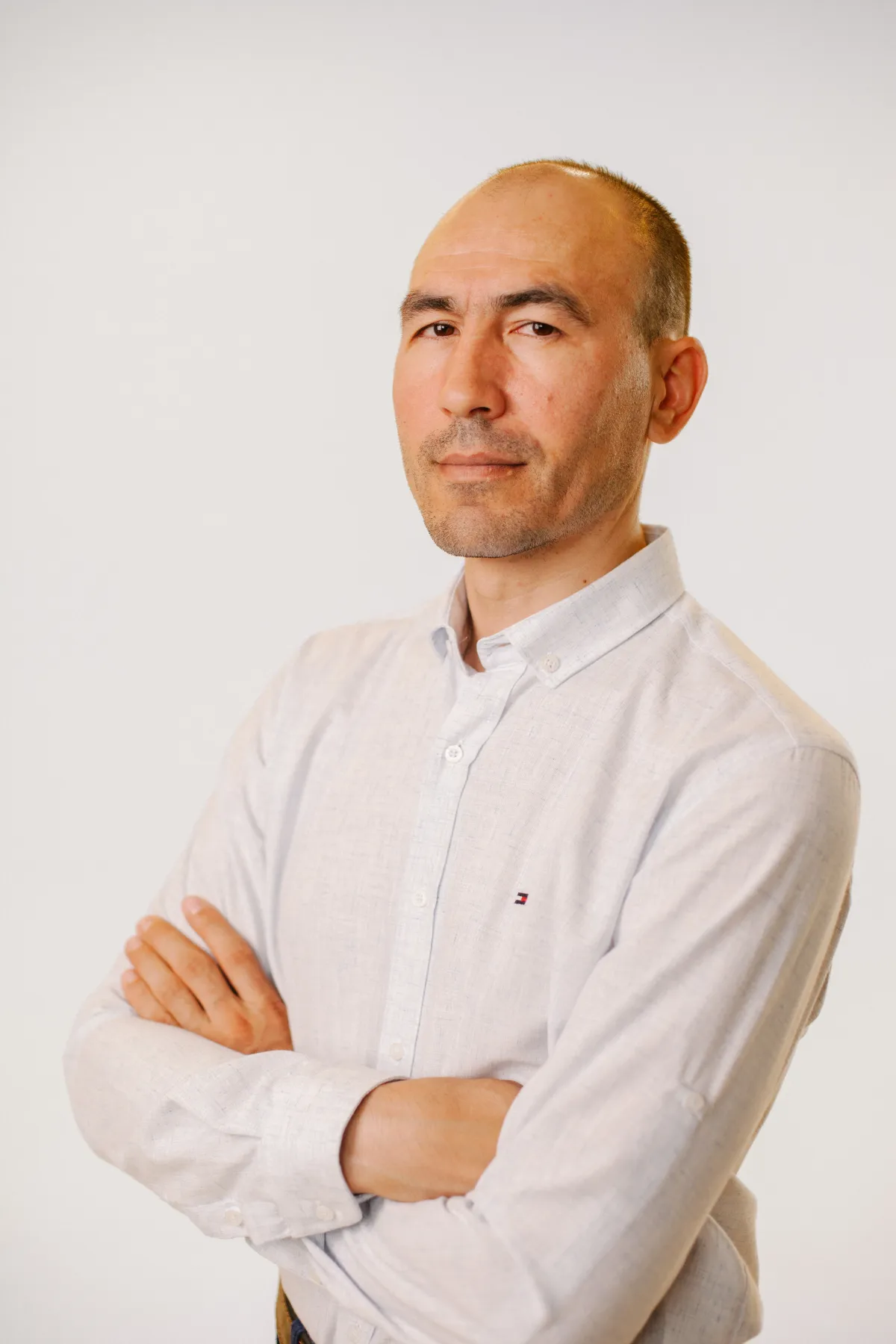 Ruslan Gabbasov